Im nächsten Schritt gehen wir in Kleingruppen zusammen, um uns auf ein Thema bzw. eine Fragestellung zu einigen, die wir soziodramatisch erarbeiten wollen. Wenn wir über „White Supremacy“ sprechen, sprechen wir über eine gesellschaftliche „Weiße Vorherrschaft“. Die Ideen dieser hierarchischen Vorherrschaft existieren seit hunderten Jahren und sind tief verwurzelt mit einem eurozentrischen und vor allem Weißen Verständnis der Welt. Diese Strukturen sind vielfältig, manchmal sichtbarer, manchmal versteckter, aber ziehen sich durch die Systeme unserer Staaten, Politiken, Justizen, Geschichtsschreibungen, Wissenschaften bis hin zum menschlichen Miteinander.
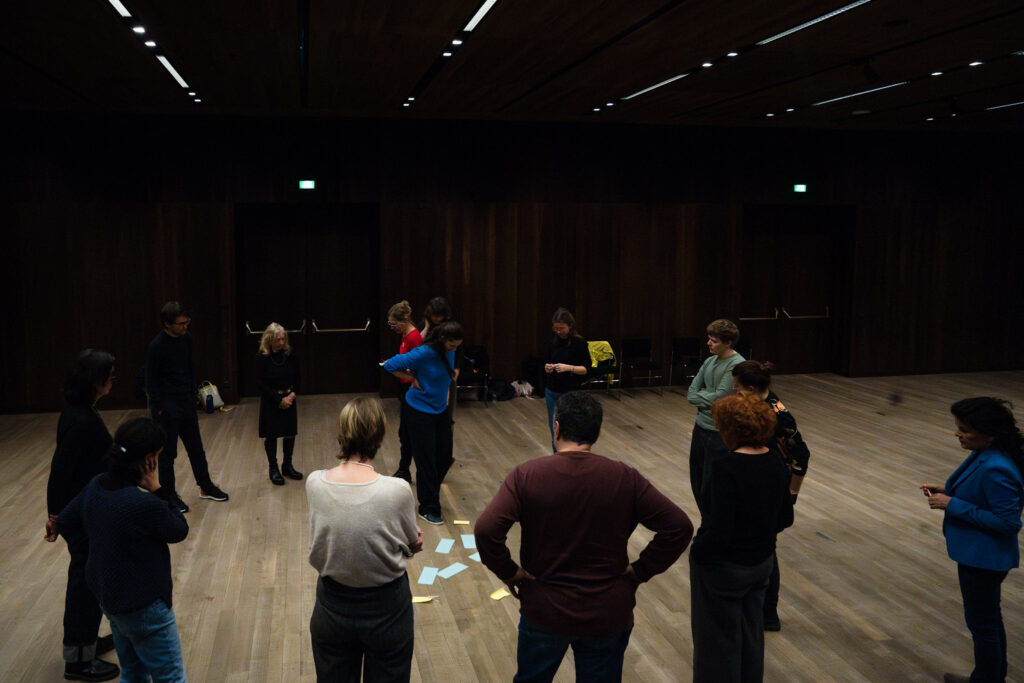
„The very serious function of racism is distraction. It keeps you from doing your work. It keeps you explaining over and over again why you are here. Somebody says you don’t have any language so you spend 20 years proving you do. Somebody says you don’t have any culture so you dredge that up. None of that is necessary. There will always be one more thing. Complete your work without worry. Do not be confused. Don’t waste your energy fighting the fever, you must only fight the disease. And I urge you to be careful, for there is a deadly prison. The prison that is erected when one spends their life fighting phantoms, concentrating on myths, and explaining over and over to the conqueror your language, your lifestyle, your culture, your habits. And you don’t have to do it anymore. You don’t have to dwell on changing the minds of racists. Racial ignorance is a prison from which there is no escape because there are no doors, and there are old, old men and old, old women who need to believe in their racism, and need you to focus all of your creative energy on them. They thrive on the failures of those unlike them. They are in prisons of their own construction. But you must know the truth. That you are free.“
Toni Morrison in 1975
Auf Basis dieses Verständnis stellen wir uns verschiedenen Fragestellung.
Wo begegnet uns in Vorarlberg „White Supremacy“?
- Öffentlicher Raum: Blicke, Starren und Getuschel von weißen Menschen
- In der Politik: Keine Repräsentation
- Bei der Arbeit: Offener Rassismus wird nicht thematisiert oder mit Verantwortung und Konsequenzen beantwortet, sondern als unangenehm und deshalb als Norm dargestellt.
- In der Medizin: Medizinische Anliegen und Schmerzen von BIPoC Personen (vor allem Frauen und queeren Personen) werden nicht ernst genommen
- In öffentlichen Verkehrsmitteln: Selektive und rassistische Kontrollen in öffentlichen Verkehrsmitteln
Wer profitiert von Kolonialismus und White Supremacy?
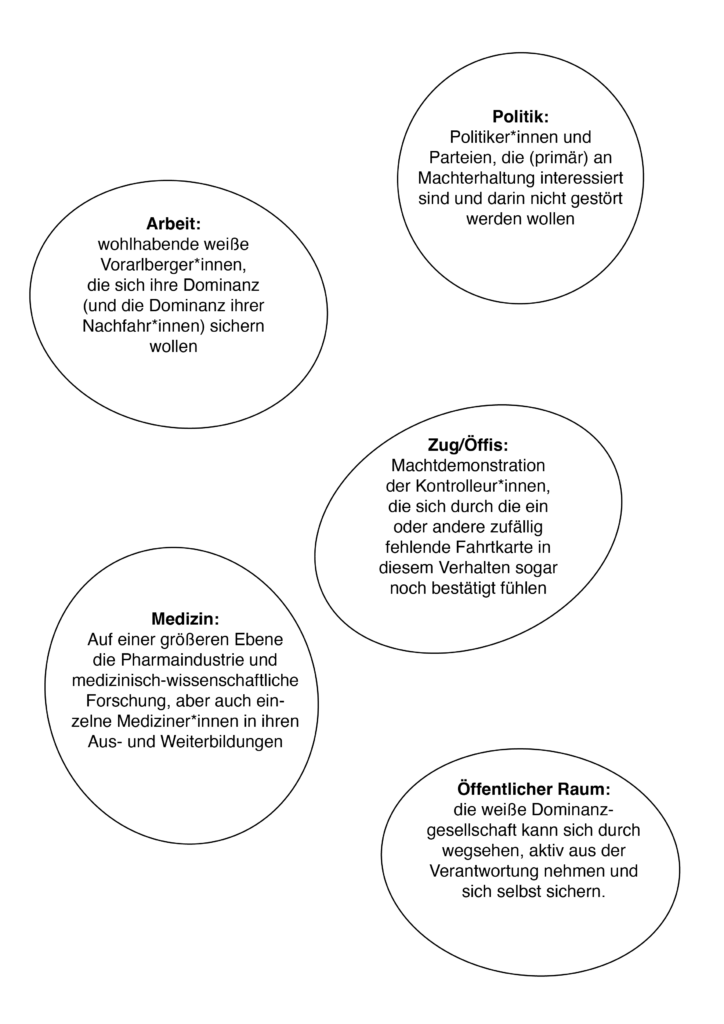
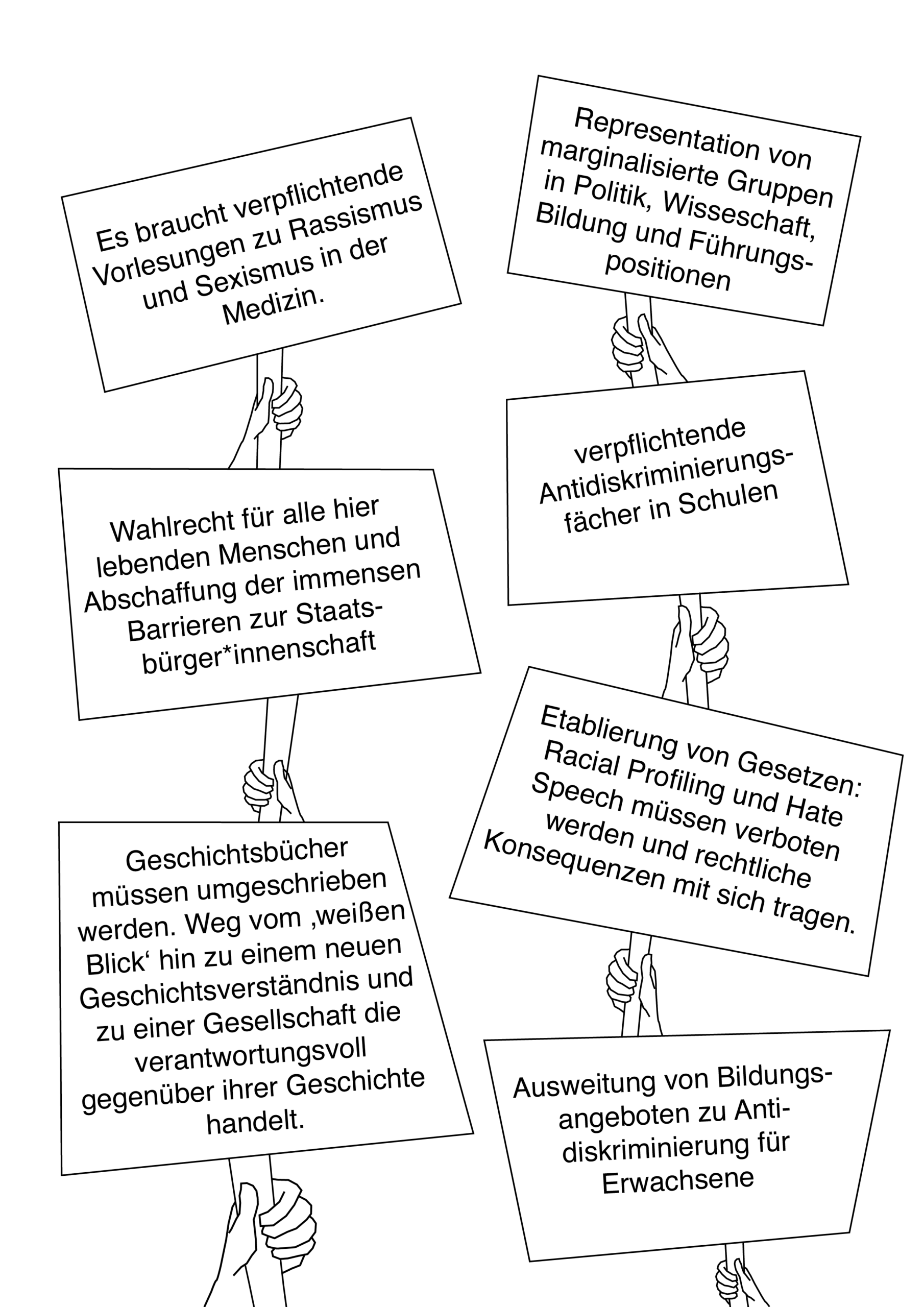
Was sind mögliche Gegenmaßnahmen zu systemischem Rassismus?
Referenz
Morrison, Toni. 1975. “A Humanist View.” In Black Studies Center Public Dialogue, Part 2. Public Dialogue on the American Dream Theme. Portland State University Black Studies Center, May 30, 1975. Portland State University Library Special Collections. https://pdxscholar.library.pdx.edu/orspeakers/90/.